
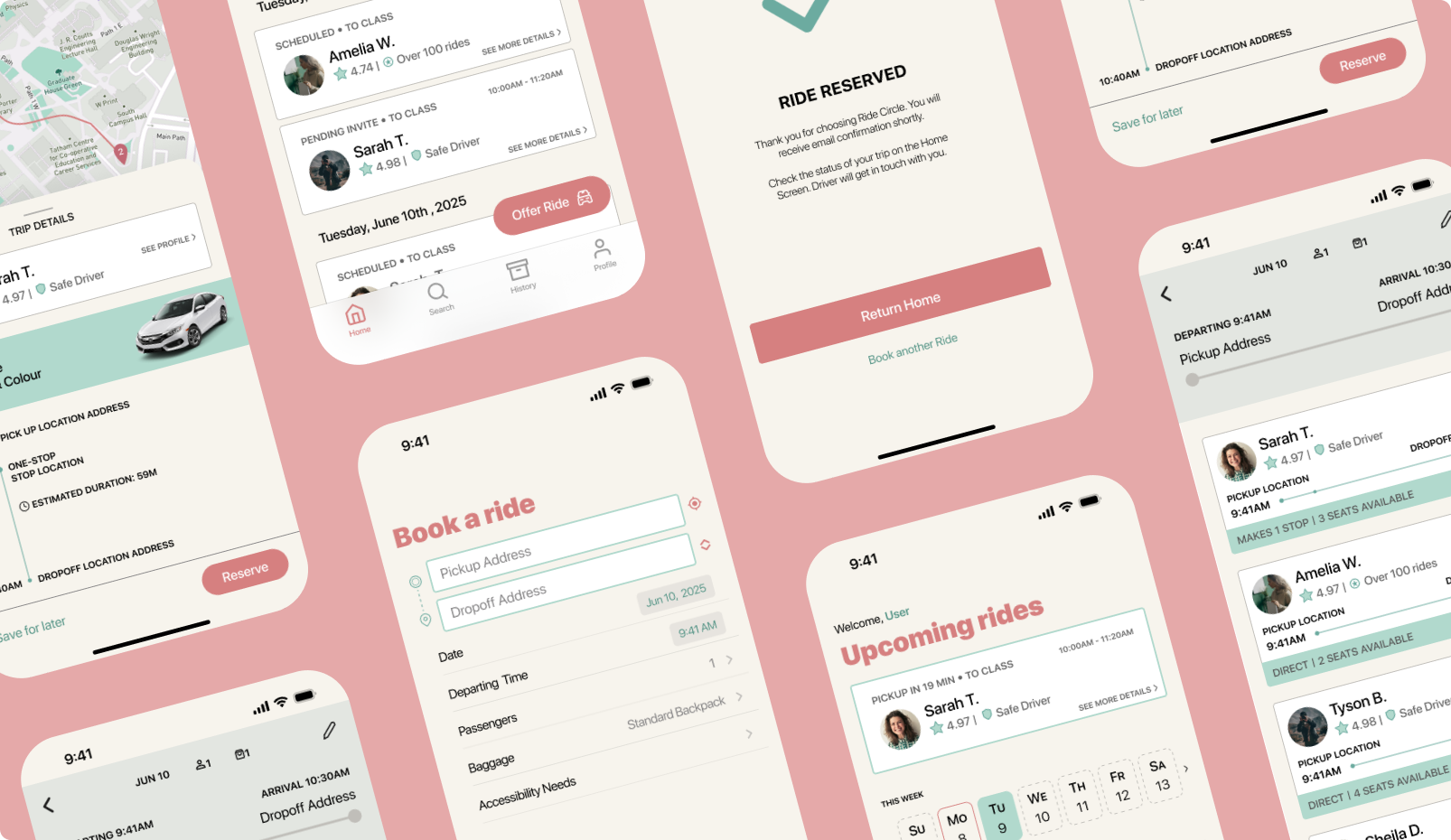
RideCircle Student Carpooling App
RideCircle is a mobile prototype designed to help university students coordinate carpools with peers who share similar routes or schedules. The goal is to reduce transportation costs for students while addressing traffic congestion and promoting more sustainable commuting habits. Many students rely on expensive or inefficient transportation options due to limited access to affordable, coordinated carpooling solutions.
Tools: Figma, Miro, Adobe Photoshop, Google Forms
Timeline: 1 month (March 2025)
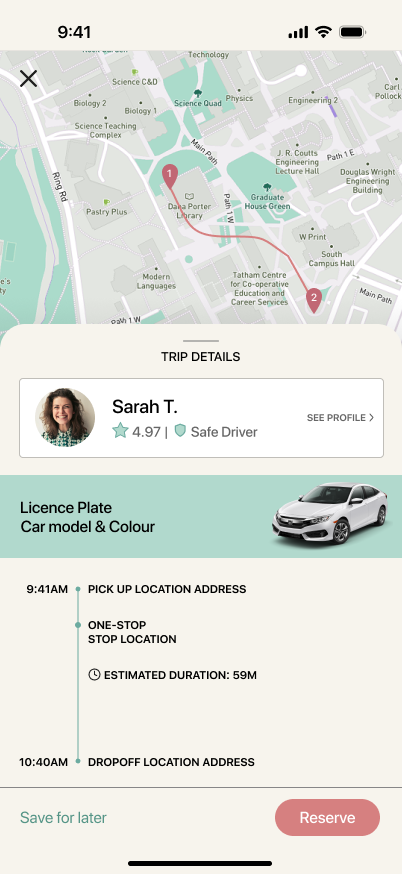
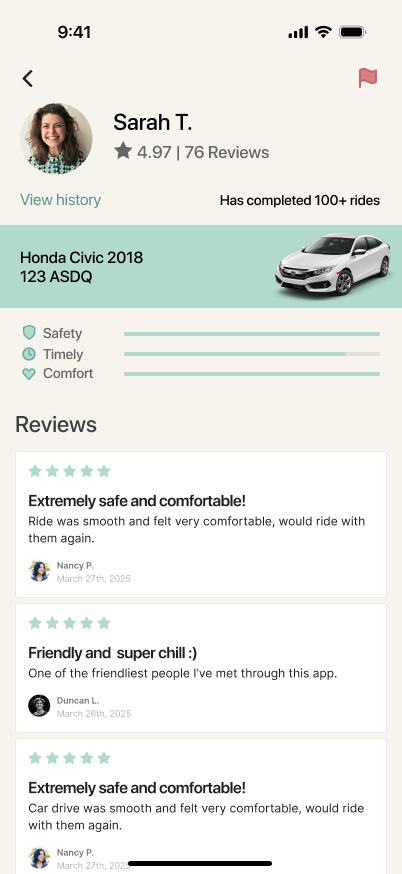
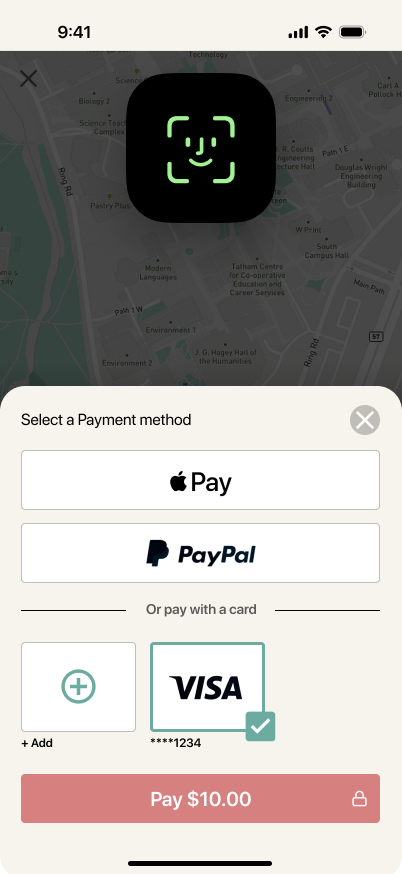
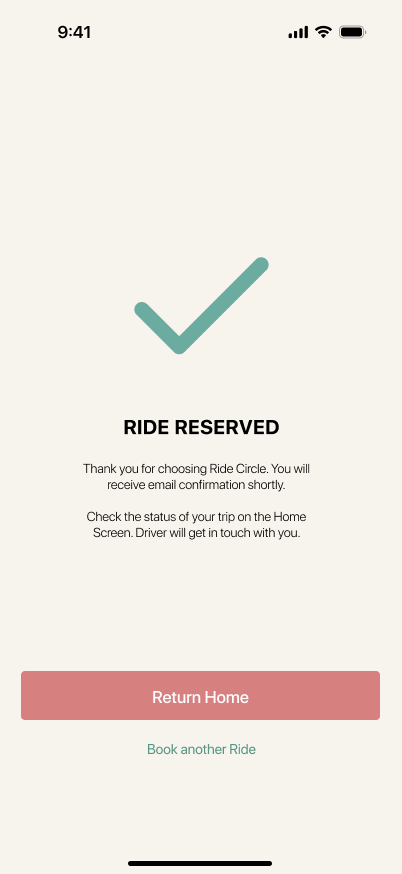
Booking a ride flow
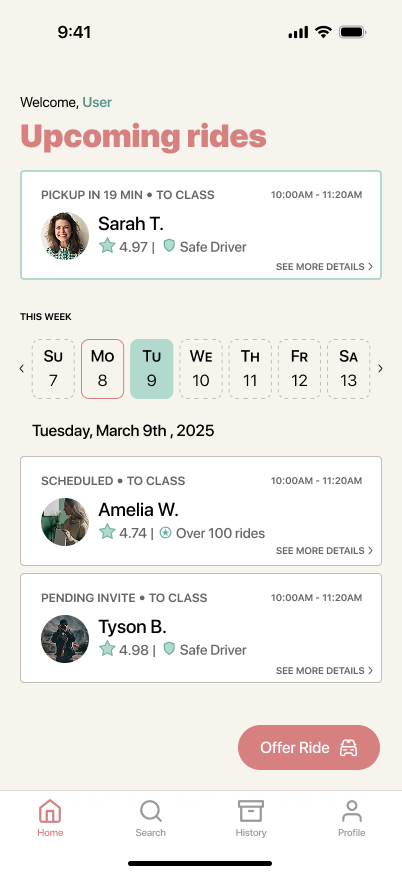
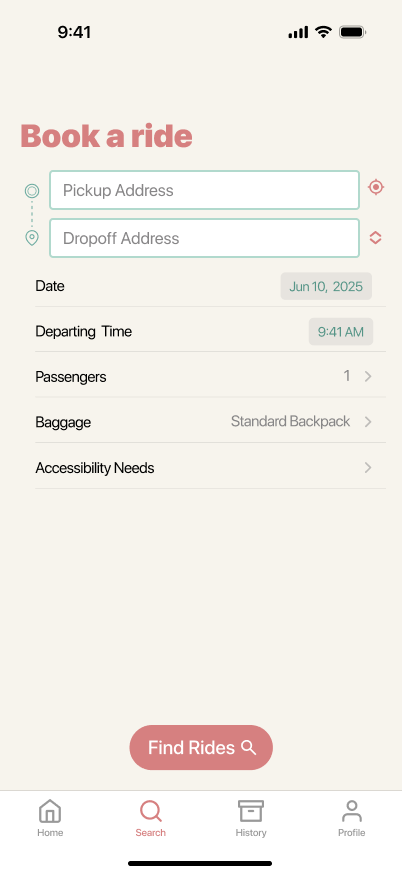
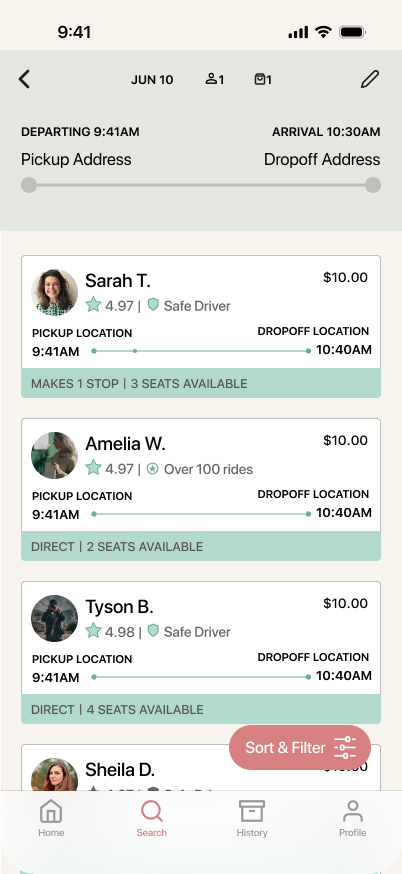
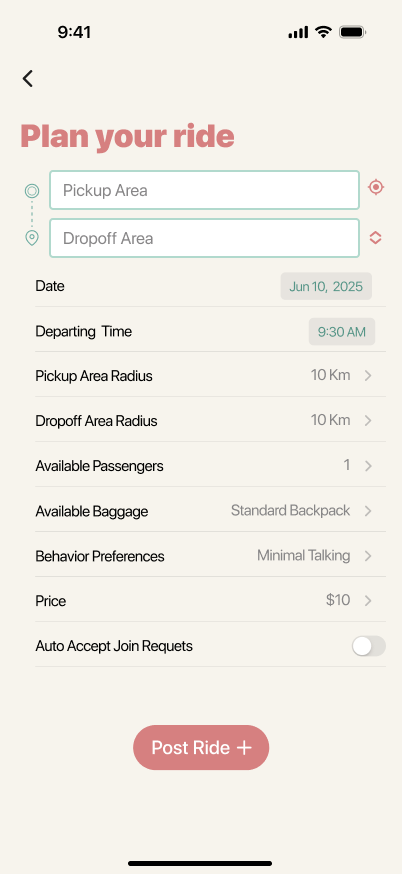
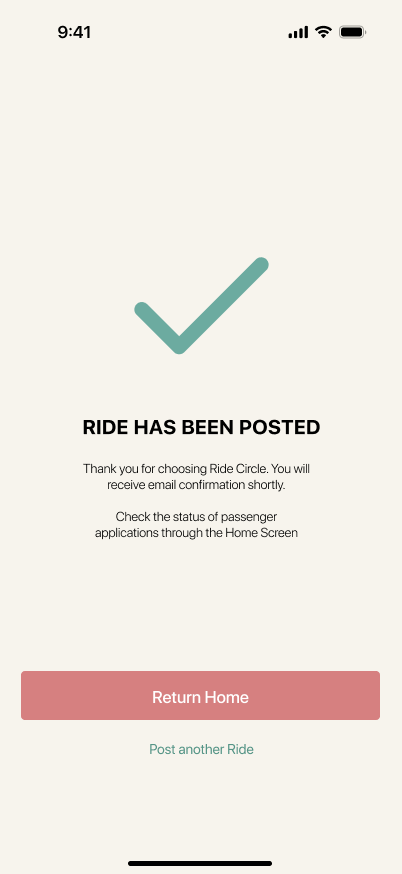
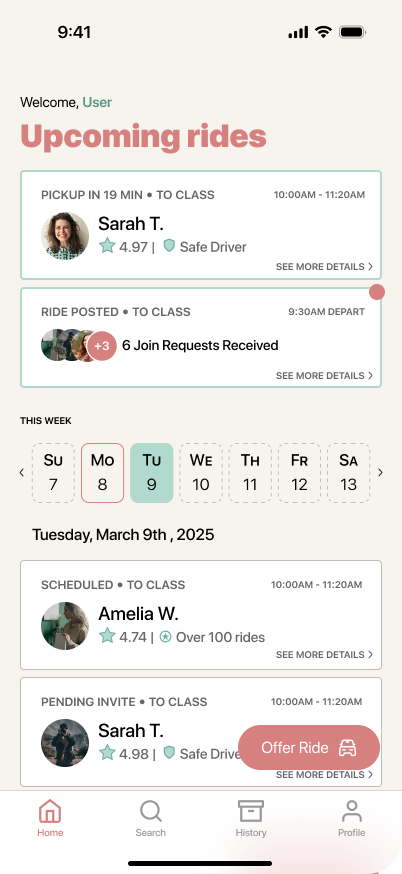
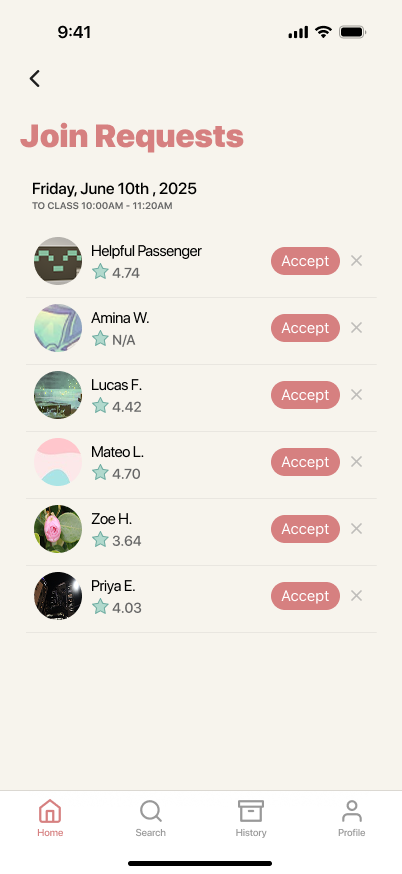
Posting a ride flow
Problem Space
Satellite and commuter campuses often lack reliable and affordable transportation options for students. In more remote locations, long and inconsistent commutes make it difficult for students to arrive on time, attend classes consistently, and stay motivated. With limited public transit and costly alternatives such as taxis or paid shuttles, transportation becomes an ongoing financial burden for students who often lack a stable income.
PROBLEM STATEMENT
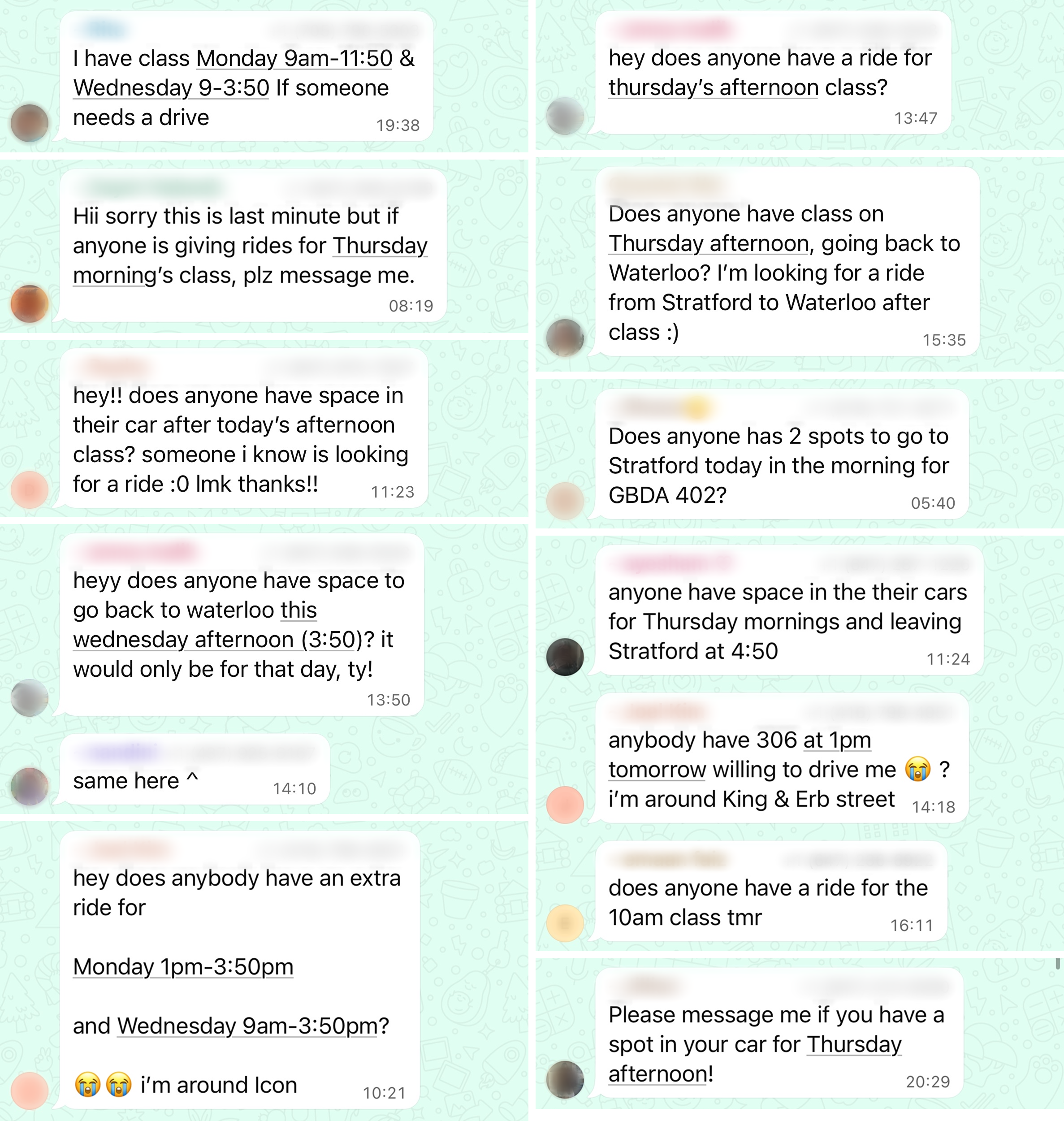
Ride coordination is currently handled through group chats, where requests clutter academic discussions and are often missed. This fragmented system makes commuting unreliable, leading to increased stress, inconsistent access to transportation, and negative impacts on attendance.
Why it matters
RideCircle improves campus access for students who rely on carpooling by turning an unreliable, informal process into a consistent transportation system. By enabling peer-to-peer ride sharing, students reduce commuting costs, increase attendance reliability, and lower their environmental impact.
The platform also drives community engagement by connecting students from nearby schools for both academic and everyday trips, including groceries, local outings, and events. This expands mobility beyond campus while strengthening social connection and participation.
Primary Research
200+
Participant reach
200+ post-secondary students across North America participated in a Google Forms survey, providing primary research insights. The survey included 12 quantitative questions and 2 short-answer questions to gather both measurable data and open-ended feedback.
88.2%
Value safety
88.2% of students identified safety as their top priority, directly informing the implementation of a two-way rating system to promote accountability and incentivise safe driver and passenger behavior.
76.9%
Concern on passenger behaviour.
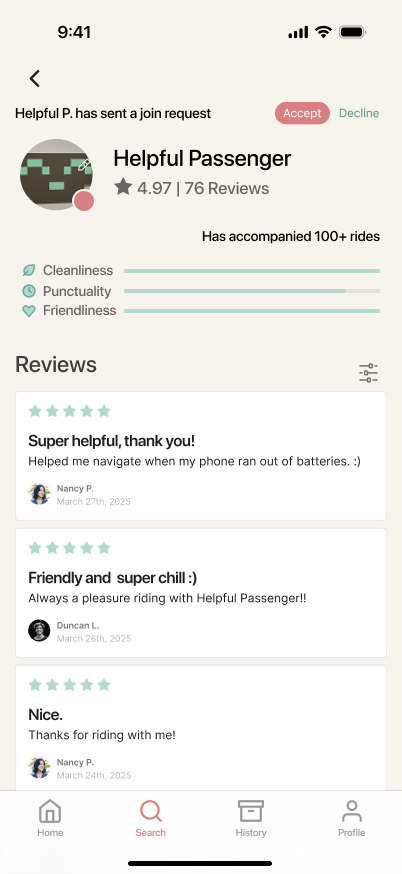
76.9% of student drivers identified passenger behaviour as their primary concern, directly informing the implementation of behavior-based ratings (cleanliness, punctuality, and friendliness) and reward badges that recognize and incentivize positive passenger behavior.
Role in Carpooling

41.2%

33.5%

13.5%

11.8%

Drivers

Passengers

Both

Does not carpool
commute frequency per week

35.3%

23.5%

17.6%

11.8%

11.8%

5 or more times

4 times

3 times

2 times

Once or less
Transportation methods

39.2%

28.5%

21.4%

10.7%

Personal Vehicle

Carpool Passengers

Public Transit

Walking/Biking
Key Insights
01
Commuting Frequency: Many students commute to campus multiple times per week, making transportation costs a recurring burden rather than an occasional inconvenience.
02
Peer Driver Presence: Almost half of students participate as drivers or both drivers and passengers, enabling a sustainable peer-to-peer carpool model.
03
Platform Opportunity: Existing carpool behavior is supported by fragmented tools, creating an opportunity for a centralized, student-focused solution.
Competitive Analysis

Poparide
Strengths:
- Cost-sharing model
- Community oriented experience
Weaknesses:
- Not designed for daily commuting
- Inconsistent availability

Uber
Strengths:
- High availability
- Established safety features
Weaknesses:
- High cost for students
- Poor fit for recurring commutes
Lyft
Strengths:
- User-friendly interface
- Safety and transparency
Weaknesses:
- High cost for students
- Not peer-based
Existing platforms either:
- Support cost-sharing but not daily student commuting (Poparide), or
- Offer reliability but are financially unsustainable for students (Uber, Lyft).
RideCircle fills this gap by providing a platform exclusive to students, a dedicated to peer-to-peer carpooling platform designed specifically for frequent campus commutes, affordability, and community connection.
Personas
The personas were developed based on the 2 primary stakeholders through a combination of user surveys, interviews, and analysis of user behavior. By synthesizing this data, common patterns and characteristics were identified that informed the creation of realistic and representative user profiles.

Khalid Steele
Khalid is a post-secondary student who relies on public transportation for daily travel but often finds it unreliable due to limited schedules and delays. To avoid long wait times and missed classes, he prefers carpooling with other students, valuing flexibility, time efficiency, and dependable transportation.
Motivations:
- Commute safely with people they trust.
- Find rides quickly without interference.
- Reduce stress around getting to and from campus.
Goals:
- Secure regular reliable rides to campus.
- Easily view ride details
- Arrive on time without relying on unreliable public transit.
Technology:
- Uses an iPhone.
- Messaging apps (WhatsApp, Instagram DMs)
- Navigation apps (Google Maps, Apple Maps)
Pain points:
- Ride requests getting lost in group chats.
- Lack of safety or trust for drivers.
- Inconsistent costs and unclear expectations.

Chanice Sullivan
Chanice is a graduate student at her local university who commutes regularly and owns a car. With limited income as a full-time student, she offers carpool rides to help offset gas costs. She values efficiency, reliability, and the opportunity to connect with other students in her school community.
Motivations:
- Offset commuting costs through shared rides
- Help fellow students get to campus reliably
- Make use of empty seats during regular commutes
Goals:
- Fill available seats without extra coordination
- Clearly set pickup times, locations, and pricing
- Avoid last-minute changes or no-shows
Technology:
- Uses an Android.
- Messaging apps (WhatsApp, MS Teams)
- Navigation apps (Google Maps, Waze)
Pain points:
- Excessive back-and-forth messaging.
- Uncertainty around passenger reliability
- Difficulty managing multiple ride requests
Original Design
This issue emerged during my enrollment in the GBDA program at the University of Waterloo’s Stratford campus, a satellite campus located an hour from the main campus. With no public transportation between the two locations, nearly 600 GBDA students rely on carpooling to commute.
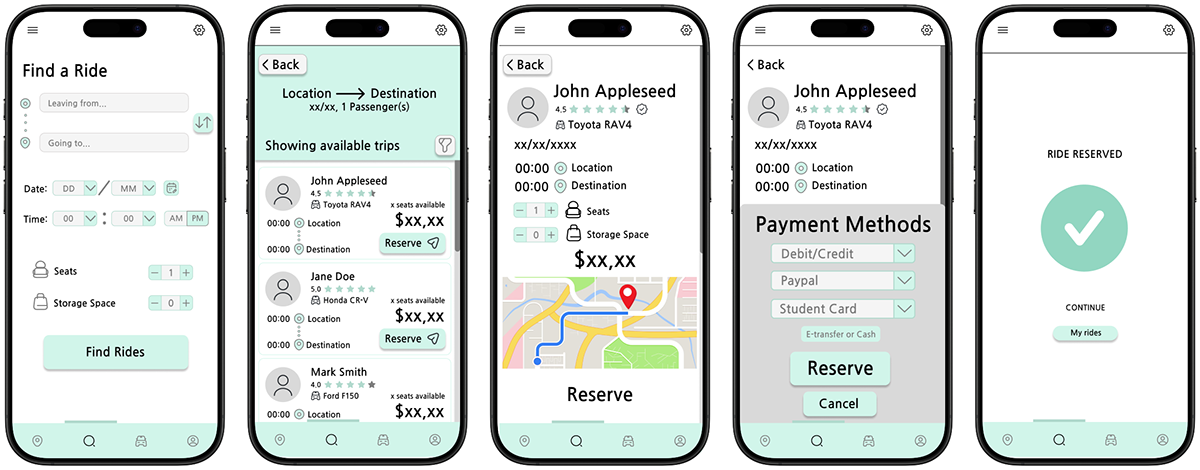
User pain points
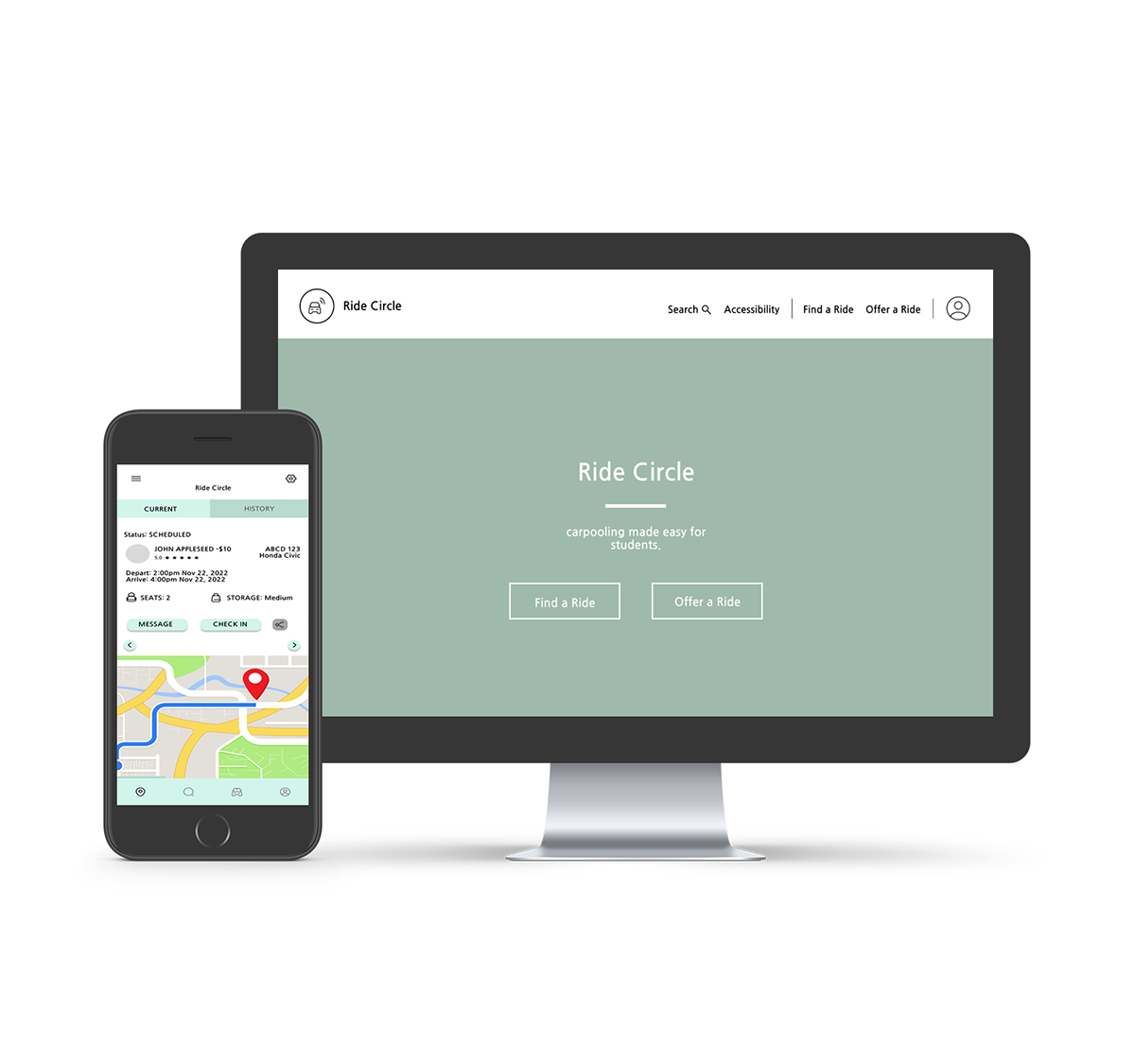
The following screenshot highlights the main pain points and problems identified in the previous “Find a Ride” flow of the RideCircle mobile app. Addressing these issues is crucial for improving user experience and accessibility.
Poor content clarity and cluttered layouts
Outdated interface patterns
Weak visual emphasis and unclear CTAs
Lack of content hierarchy
Unclear navigation cues


Redesign
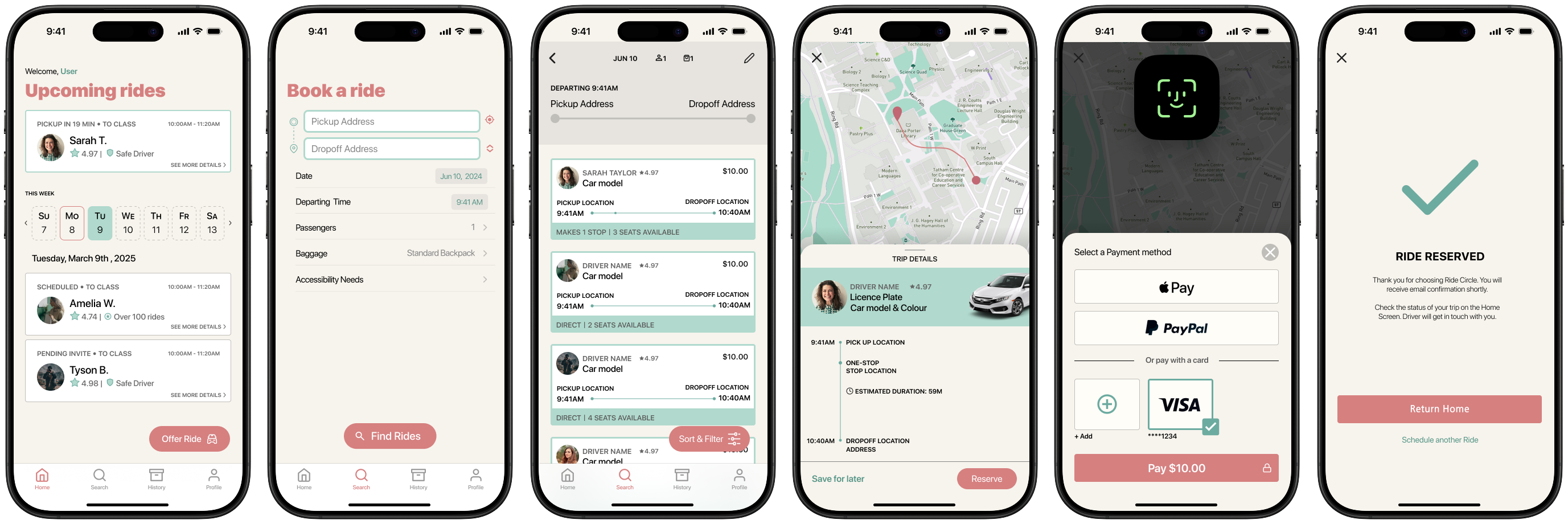
The redesigned “Find a Ride” flow prioritizes clarity and efficiency through a simplified layout and modern visual hierarchy. Each screen clearly guides users toward the next action while offering flexible fallback options, allowing users to confidently review and adjust their choices without friction.
This site is still under construction. Thanks for your patience! More content coming soon. 😊
Made with ❤️ using Figma